Aliens vs Zombies: Invasion
- 4.7
- Rating
- 1.00M
- Installs
- Free
- Price

 Analysis by App-foxy
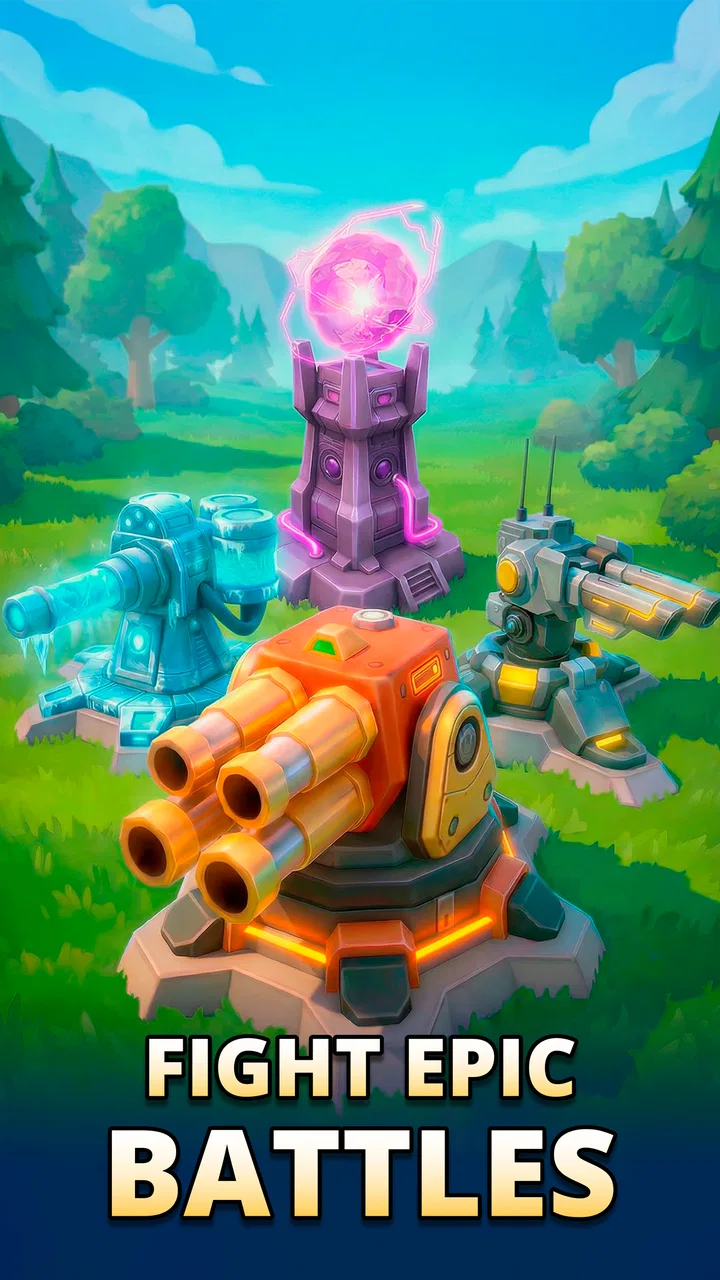
I spent time with Aliens vs Zombies: Invasion as a tower-defense game that works best when I want a focused strategy session rather than a long, complicated campaign. Its central idea is easy to understand: alien attackers arrive, zombies are part of the threat, and I place defensive towers to protect my base. That familiar setup makes it approachable, but the real appeal comes from deciding where limited defensive power matters most before the next wave exposes a weak point.
What makes it especially interesting for a shared household device is that it is simple to explain without being completely mindless. One person can play while someone else suggests a tower position, spots a dangerous route, or argues that upgrading an existing defense is wiser than adding another one. I found that this creates a useful middle ground: it is accessible enough for casual players, yet it still gives a strategy-minded player something to think about.
The game is free to download, with optional in-app purchases ranging from $0.99 to $109.99 per item. That price range is worth discussing before anyone in the household starts playing, particularly if the device is shared. The game itself is not difficult to understand at first glance, but spending decisions can become a separate issue from tactical decisions. My recommendation is to treat the game as a free strategy experience first and decide in advance whether purchases are appropriate for the people using the device.
You May Also Like

 Blood Strike: 2.5 Anniversary
Blood Strike’s Loadouts Turn Every Drop Into a Tactical Gamble
A close look at Blood Strike’s custom loadouts: how fast access to signature weapons reshapes its battle royale rhythm, rewards preparation, and narrows the gap between fights.

 Pandora - Music & Podcasts
Pandora’s Music Is Easy to Start, but Harder to Recover
Pandora’s strength is its low-effort path from a seed to a station. Its weak spot is how much confidence it asks you to place in connection, setup, and quiet recovery.

 8 Ball Pool
 Is Built on Rivalries, Rematches, and Routine
A close look at the rivalries, rematches, shared routines, and unanswered safety questions that turn a quick pool match into a persistent mobile community.

 Samsung Music
’s Quiet Strength Is Playing What You Already Own
Its reach comes less from spectacle than from dependable access to a personal library. That simplicity is both the app’s strongest retention engine and its ceiling.

 AccuWeather: Weather Radar
AccuWeather Review: A Quick, Clear Forecast for Everyday Decisions
For everyday plans, the best forecast is the one you can understand quickly. AccuWeather makes rain timing, radar, and local conditions easy to act on, with a few trade-offs.

 Hill Climb Racing
Why Hill Climb Racing Still Turns Crashes Into One More Run
A tiny car, a bumpy hill and one more upgrade: Hill Climb Racing keeps resurfacing because its simple chaos makes every near-miss feel personal.
More From Our News Desk



How it feels in a shared household session
A realistic use case is a short evening break in which one family member has the phone or tablet and another person is nearby. The player can handle the controls while the observer helps with planning. Because the basic objective is immediately visible, the second person does not need a long explanation of the rules before contributing. They can ask why a tower is being placed in one location instead of another, or point out that concentrating every defense at the entrance may leave the base exposed later.
I like this kind of shared play because it does not require both people to have accounts, controllers, or matching devices. It is more like solving a small tactical problem together than playing a traditional multiplayer match. That distinction matters. The game is suitable for taking turns with the same device or discussing decisions side by side, but I would not present it as a coordinated online experience. Its value in a household comes from conversation and observation, not from assuming that everyone is connected to the same session.
It also works well when attention is divided. A player can make a decision, watch the defense unfold, and then reassess the next threat. That makes it easier to fit into a casual routine than a game that demands constant communication with teammates. At the same time, the tower-defense format punishes careless attention. If the player is repeatedly interrupted, the person offering advice may understand the situation better than the person holding the device, but the final decision still has to be made quickly enough to matter.
For a household with different gaming preferences, this is one of the stronger reasons to try it. Someone who normally avoids complicated strategy games can understand the immediate goal, while a more experienced player can focus on placement, timing, and resource priorities. I would still avoid forcing it into a group activity. Some people enjoy tower defense precisely because they can think quietly and make their own choices. The shared-device benefit is real, but it depends on whether everyone is comfortable treating the game as a discussion rather than a competition.
What to settle before installing it on a shared device
The first boundary I would establish is who is allowed to make purchases. The game is free, but the presence of optional items means “free to start” should not be confused with “nothing can be bought.” On a family tablet or a phone used by several people, the safest everyday arrangement is to agree that purchases require the device owner’s permission. This is not a special feature of the game; it is a practical household rule that prevents a tactical session from turning into an unexpected billing conversation.
The second boundary concerns progress. If several people take turns on one device, they should agree whether the person who starts a run controls the decisions, whether turns alternate after a defeat, or whether everyone can make suggestions. Without that agreement, a cooperative-looking session can become frustrating. One player may want to experiment, while another may want to use the safest possible approach. I found that deciding this before the first serious attempt keeps the game enjoyable.
Account expectations deserve the same clarity. I would not assume that a shared device automatically creates separate personal spaces or separate progress paths. If different household members care about preserving their own decisions, they should check what the current installation offers and avoid treating one shared game session as a private profile for each person. If personal progress is important, a personal device is the cleaner arrangement.
That point is especially important for children and adults using the same tablet. An adult may be happy to experiment with a risky defense layout, while a younger player may want to build on a successful approach without changing anything. A simple agreement such as “this session is for trying things” or “this session is for careful progress” can prevent unnecessary arguments. The game does not need complicated household rules, but it benefits from clear expectations.
There is also a practical age boundary. The content rating is Everyone 10+, which makes it more suitable for older children than for very young users, but a rating is not a substitute for a parent’s judgment. The alien-and-zombie theme may be harmless to one child and uncomfortable to another. I would watch the first session, explain that the game is fictional, and pay attention to whether the player enjoys the strategy or simply feels pressured by the attack imagery.
Learning the defense loop without wasting early attempts
The most useful habit I developed was to treat the opening part of a level as information-gathering time rather than immediately spending everything. A tower placed in the first available location may appear helpful, but a better position can become obvious once the movement path and the pressure on the base are clear. I prefer to observe the first threat, identify where enemies create the most danger, and then commit resources with a reason.
That does not mean waiting forever. Tower defense is about acting before the situation becomes unmanageable. The trade-off is between a strong early response and keeping enough flexibility for the next wave. If I spend too much on one impressive defense, another route may become the real problem. If I spread everything too thinly, no position may be strong enough. The important decision is not simply which tower looks strongest, but where one improvement changes the whole defensive picture.
When sharing the device, I found it helpful to give each person a specific role in the discussion. One person can watch the base and call out danger, while the player considers placement and upgrades. This avoids the unhelpful situation in which several people give different instructions at once. It also teaches a useful strategy principle: information and control are different things. The observer may notice a threat first, but the player still needs to choose whether responding now is worth delaying another improvement.
Another practical tip is to discuss the reason for a defeat instead of immediately restarting without reflection. Was the problem a poor location, an upgrade made too early, or a failure to protect a vulnerable route? Even a short conversation can turn a lost attempt into useful knowledge. This is where the game has more depth than its short description suggests. The alien-versus-zombie theme attracts attention, but the lasting interest comes from learning how small placement decisions affect the survival of the base.
I also recommend not judging a strategy from one successful wave. A setup that handles the opening comfortably may become inefficient when the pressure changes. In a shared session, this creates a good opportunity to compare predictions with results. Before the next wave, each person can say what they expect to happen. That makes the game feel less like tapping through a routine and more like testing a plan.
Age, trust, and responsible use
The Everyone 10+ rating gives families a useful starting point, but I would still introduce the game gradually. A child who understands tower placement may not understand the difference between an in-game temptation and a purchase that affects the household budget. The strategy layer and the spending layer should be explained separately. I would say clearly that winning a difficult defense is not a reason to buy something, and that asking first is part of using a shared device responsibly.
For adults, the same principle applies in a different way. A free game with optional purchases can be perfectly reasonable when used deliberately, but it is less comfortable when several people are making decisions on one device without knowing who is responsible for the account or payment method. I would keep the game available for normal play while making the purchase rule explicit. That preserves the casual appeal without allowing a moment of frustration to decide a household expense.
The age context also affects the way people talk about failure. Younger players may interpret a defeated base as a personal mistake, while experienced players see it as feedback about the setup. I found that encouraging experimentation works better than presenting every loss as something to avoid. The game is at its most useful when players can try a different placement, compare the outcome, and understand why the result changed.
Trust matters when one person is responsible for progress. If a child is allowed to play independently, the adult should be comfortable with that person making tactical choices without constant correction. If the adult wants to supervise every move, it may be better to call the session a shared activity rather than independent play. That small distinction prevents both sides from feeling disappointed: the child gets room to play, and the adult knows when guidance is expected.
I would also be careful about presenting the game as educational simply because it involves strategy. It can encourage planning, observation, and discussion, but it is still entertainment. Its value comes from the quality of the decisions and the conversations around them, not from a promise that every session teaches a formal lesson. For families, that honest framing makes it easier to enjoy the game without placing unnecessary expectations on it.
Where it stands beside other strategy choices
Compared with a large strategy game built around long campaigns, extensive menus, or complex economies, this title is easier to bring into a short household session. You can explain the basic situation quickly, and the focus stays on defending the base rather than learning a large collection of systems. That accessibility is its main advantage for mixed-skill groups.
The trade-off is that players who want broad empire management, deep storytelling, or a highly social competitive structure may find it limited. A traditional strategy alternative may offer more layers between decisions, while a competitive multiplayer game may provide stronger teamwork and rivalry. I would choose this game when I want a compact defense problem, not when I am looking for a persistent world or a full team-based experience.
It also differs from very casual games because the outcome is not only about quick reactions. Placement and timing matter, and a player who repeatedly reacts without considering the next threat can create problems later. That gives it more substance than a simple reflex diversion. Still, it remains approachable enough that I would recommend it before a more demanding tower-defense title to someone who is new to the genre.
For experienced tower-defense players, the question is less about whether the premise is original and more about whether the pacing and available choices hold attention. The alien and zombie combination gives the game a recognizable identity, but the appeal depends on how much enjoyment you get from refining defensive layouts. If you need a huge range of systems immediately, you may prefer a more expansive alternative. If you enjoy improving one decision at a time, this is easier to settle into.
Device fit, cost expectations, and who should skip it
The game supports Android devices running version 7.0 or later, so its compatibility reaches back to older Android software. That makes it a practical candidate for a household tablet or spare phone that is not running the newest system. Even so, I would install it on the actual shared device and test the experience before making it the family’s main game. Compatibility is only the starting point; screen size, responsiveness, and comfort during longer sessions still affect whether everyone enjoys it.
The current version is 2602.24.874, and the game comes from GAMEGEARS LTD. Its release date was Nov 15, 2024, which places it among relatively recent options for someone choosing a new tower-defense game rather than returning to an older favorite. The important practical point is that a household should keep the installation updated through its normal app-store routine, especially when several people depend on the same device.
Its audience is already substantial, with over 1 million installs, around 33 thousand ratings, and an average rating of 4.8. Those figures suggest that the game has attracted a strong response, but I would not use popularity as a substitute for personal fit. A high rating cannot tell you whether a child will enjoy the theme, whether a parent is comfortable with optional purchases, or whether an experienced strategist will want more complexity.
I would skip it if you want a completely purchase-free environment with no need to discuss spending. I would also look elsewhere if your priority is direct multiplayer coordination, a deep narrative campaign, or a strategy game that feels like a long-term management project. The same is true if the person using the device dislikes defending against alien or zombie attackers. The premise is clear enough that there is little point pretending the theme will disappear behind the mechanics.
On the other hand, I think it is a good fit for someone who wants a free entry point into tower defense, a parent looking for a game that can support side-by-side discussion, or a household that enjoys taking turns on one screen. It is particularly useful when players have different skill levels because the basic objective is easy to follow while the placement decisions invite more experienced advice.
My household verdict
After using it as both a solo strategy game and a shared-device activity, I see Aliens vs Zombies: Invasion as a straightforward but worthwhile choice for households that set boundaries before playing. Its strongest feature is not merely the alien-and-zombie theme. It is the way a simple defense objective creates room for planning, disagreement, experimentation, and learning without demanding that everyone become a serious strategy gamer.
I would install it for a family member who likes short tactical challenges and is comfortable with a fictional action theme rated Everyone 10+. I would introduce it to a shared device with a clear purchase rule, an agreement about whose progress is being changed, and a decision about whether the session is cooperative advice or one person’s independent turn. Those small steps make a noticeable difference to the experience.
The free starting point is appealing, but the optional purchase range means adults should remain aware of how the device is used. The Android requirement is broad enough for many older devices, and the game’s strong reception makes it easy to understand why people are trying it. Still, I would judge it by the actual household: the right player will enjoy improving defenses, while the wrong player may find the repeated pressure or theme unappealing.
My final recommendation is positive, with sensible limits. This is not the game I would choose for a large shared campaign, deep social competition, or a completely frictionless child account experience. It is the game I would choose when two people want to look at one screen, make a plan, watch that plan face an alien-and-zombie attack, and then decide what to change. For that specific role, it delivers a more thoughtful experience than its compact premise initially suggests.
FAQs for Aliens vs Zombies: Invasion
01What is the main objective of Aliens vs Zombies: Invasion?
In Aliens vs Zombies: Invasion, the primary goal is to defend your territory against waves of zombies using alien technology and strategy. Players must choose from various alien weapons and power-ups to fend off the undead threat while completing missions and unlocking new levels. The blend of strategy and action provides a dynamic gaming experience.
02Is Aliens vs Zombies: Invasion free to play or does it have in-app purchases?
Aliens vs Zombies: Invasion is free to download and play. However, it includes in-app purchases that enhance gameplay, such as additional weapons, power-ups, and cosmetic items. While these purchases can enrich the gaming experience, they are not necessary to progress through the game.
03What are the system requirements for Aliens vs Zombies: Invasion on mobile devices?
To run Aliens vs Zombies: Invasion smoothly, Android devices require version 5.0 or higher, while iOS devices need iOS 10.0 or later. The game is optimized for both smartphones and tablets, but a device with at least 2GB of RAM is recommended for the best performance.
04Does Aliens vs Zombies: Invasion offer multiplayer or cooperative modes?
Currently, Aliens vs Zombies: Invasion is a single-player game focused on providing an immersive solo experience. While multiplayer or cooperative modes are not available, the game regularly updates with new challenges and missions to keep players engaged.
05How often does Aliens vs Zombies: Invasion receive updates and new content?
The developers of Aliens vs Zombies: Invasion are committed to delivering fresh content regularly. Updates typically include new levels, weapons, and seasonal events. Players can expect frequent enhancements and bug fixes to improve gameplay and introduce exciting new features.
Pros
- Engaging storyline keeps players hooked.
- Diverse weapon options enhance gameplay.
- Smooth graphics and animations.
- Challenging levels for advanced players.
- Regular updates with new content.
Cons
- Occasional in-app purchase prompts.
- Can be resource-heavy on older devices.
- Some levels feel repetitive.
- Requires constant internet connection.
- Advertisements can interrupt gameplay.

Aliens vs Zombies: Invasion
Gallery